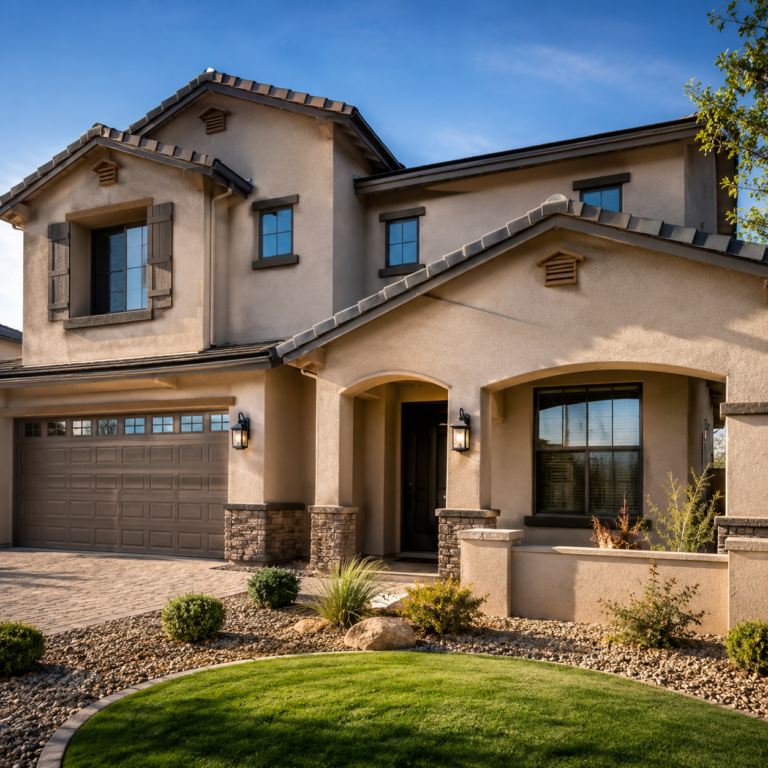
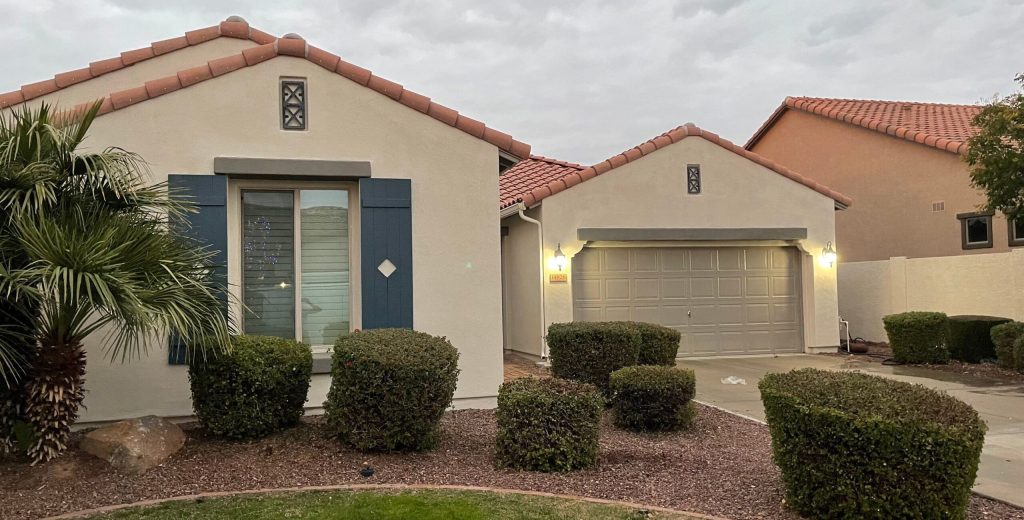
Exterior paint in Arizona faces extreme conditions. The challenge increases when damaged paint, paint peeling, and exterior home surfaces are exposed to long-term heat. Exterior paint must withstand direct UV rays and rapid temperature changes.
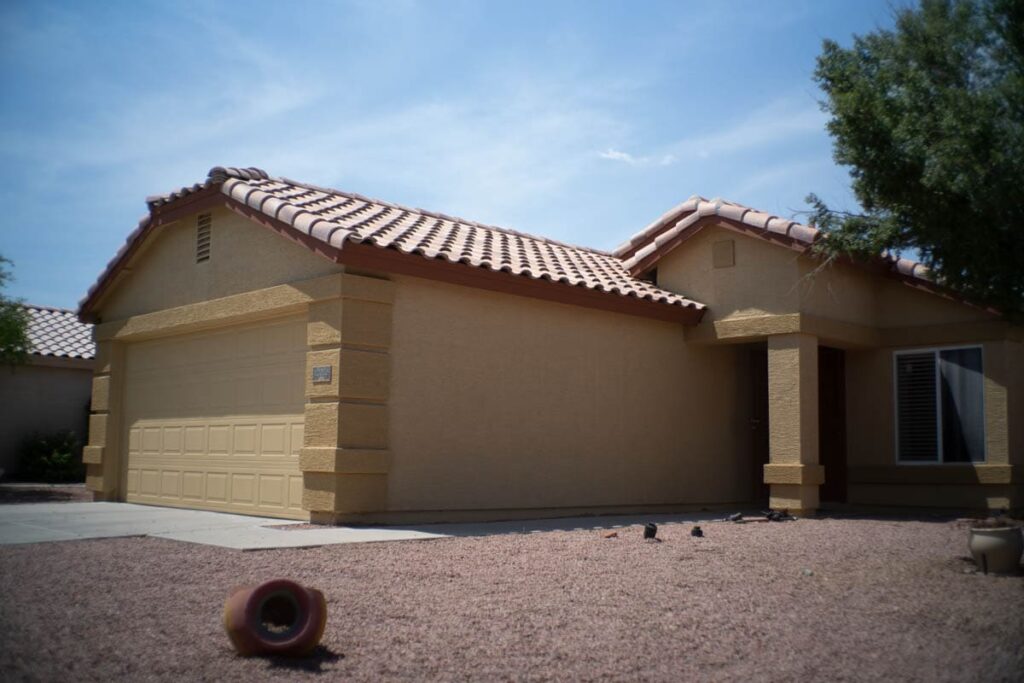
Why Arizona Climate Damages Exterior Surfaces
Arizona weather is harsh on exterior surfaces. Summers rise past 110 degrees. Evenings cool quickly. These temperature swings create fast expansion and contraction. Exterior paint weakens under these shifts. Peeling often forms when old layers can no longer stretch with the surface.
Additionally, UV rays break down binders. Consequently, pigments fade. As a result, adhesion fails. Eventually, peeling becomes visible in small cracks before entire patches fall away.
Peoria, AZ homes face strong sun and low humidity. These conditions dry paint too fast. Quick drying reduces bonding strength. Therefore, premature peeling appears earlier in this region than in cooler states.
Poor Surface Preparation Leads to Failure
Surface prep is essential for durability. Dust, chalk, and old residue prevent adhesion. Paint must bond to a clean surface. Many older homes in Peoria have chalky siding. This residue forms when previous coatings degrade.
If paint is applied over chalk, peeling is guaranteed. Consequently, pressure washing is often required. Additionally, sanding also helps create texture. Furthermore, proper priming ensures maximum adhesion. However, it is important to note that skipped prep steps are a top cause of paint failure in Arizona neighborhoods.
Moisture Buildup Behind Paint Layers
Even in Arizona’s dry climate, moisture still causes problems. Morning irrigation, monsoon humidity, and interior leaks all affect walls. Moisture trapped behind paint pushes outward. Bubbles form. As bubbles pop, peeling begins.
Stucco homes absorb water easily. If not sealed properly, moisture enters through hairline cracks. Wind-driven rain during monsoon storms intensifies this process. Eventually, the damaged areas spread across exterior surfaces.
Inferior or Wrong Type of Paint
Not all paints handle Arizona heat. Basic formulas cannot withstand UV exposure. Inexpensive products dry out fast. Binder breakdown happens early. As a result, peeling occurs sooner.
High-quality elastomeric or premium acrylic coatings perform better. They stretch with temperature swings and resist fading. They repel water. Elite Custom Painting & Cabinet Refinishing uses top-tier coatings to prevent premature failure.
Age of the Home and Natural Wear
Older homes have layers of previous coatings. Some layers may be incompatible. When these layers move differently, peeling starts at the weakest point. Homes more than 15 years old often require full repainting.
Additionally, natural wear accelerates in Peoria’s climate. Dust storms sandblast exterior walls. Abrasion thins the protective layer. Over time, the coating loses strength and breaks apart.
Over-Application or Improper Thickness
Applying paint too thickly can cause issues. Thick layers dry unevenly. The top surface dries first. Underlying layers trap solvents. Solvent release causes blistering. Blistering then leads to peeling.
Alternatively, applying paint too thin reduces coverage. UV rays penetrate quickly. The paint fails faster. Proper mil thickness ensures longevity. Professional painters measure and verify coverage before finishing.
Incorrect Timing During Application
Weather conditions impact results. Painting in direct sunlight dries paint too rapidly. Painting during the monsoon season introduces humidity. Ideal conditions are cooler mornings with shade.
Many DIY projects fail because timing is ignored. Professionals watch weather patterns. This ensures smooth application and long-lasting results.
Signs Your Exterior Paint Needs Attention
Peeling spots usually start small. Flaking around trim, fascia, and stucco cracks are common indicators. Faded patches also show weak binder structure. If you notice chalky residue when touching the wall, the surface is breaking down.
Ignoring small issues leads to complete coating failure. Eventually, the exterior of the home requires full restoration instead of simple touch-ups.
How to Prevent Peeling in Arizona Homes
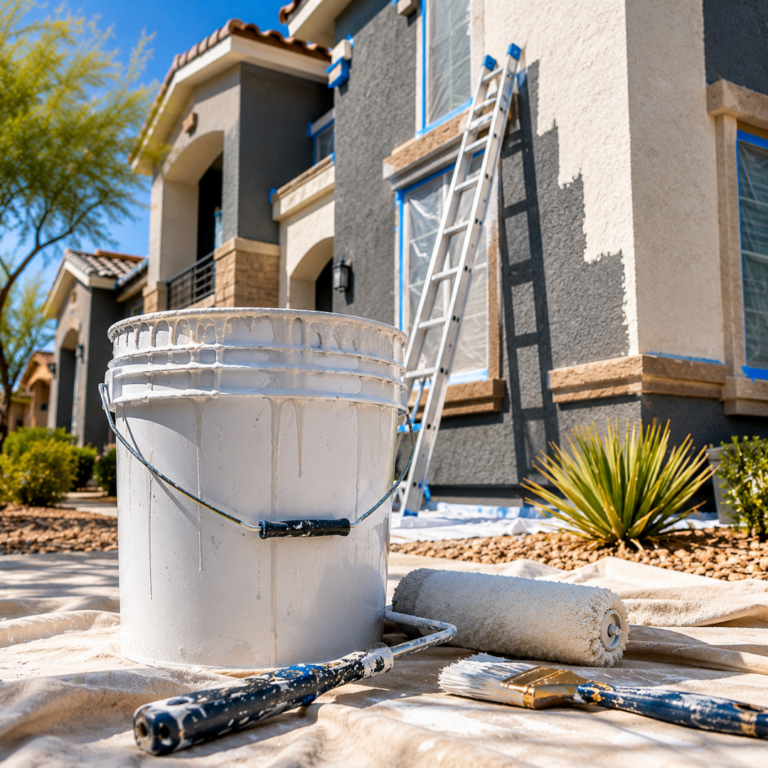
Prevention begins with professional preparation. Power washing removes loose material. Repairing cracks stops moisture entry. Sanding ensures better adhesion. Priming seals porous stucco. Using high-quality Arizona-rated coatings provides long-term protection.
Elite Custom Painting & Cabinet Refinishing follows a multi-step process designed for desert climates. First, each layer is applied correctly. Additionally, each surface is evaluated in detail. Consequently, this ensures the new coating withstands UV, heat, and wind.
When to Call a Professional Painter
DIY repairs can hide deeper issues. Peeling sometimes indicates structural moisture problems. Professional painters can evaluate causes accurately. They may identify cracks, poor drainage, or improper coating types.
Additionally, professionals use tools and products unavailable in retail stores. Consequently, this creates stronger, longer-lasting finishes. Therefore, if you notice early peeling or fading, it is best to schedule a consultation immediately.
Contact Elite Custom Painting & Cabinet Refinishing Today
Your exterior deserves expert care. Peoria homes require paint systems built for Arizona’s climate. Elite Custom Painting & Cabinet Refinishing provides high-quality solutions tailored to your exterior paint needs.
If you see damaged paint, bubbling surfaces, or peeling walls, then contact us for a consultation today. Furthermore, our team will restore your exterior home with durable, beautiful results that will last for years.